Pakistan’s Textile Comeback: $1.6B Export Boom in September 🌍 Knitwear & denim drive record growth, powering 60% of total exports.
11/3/20252 min read
KARACHI – October 31, 2025:
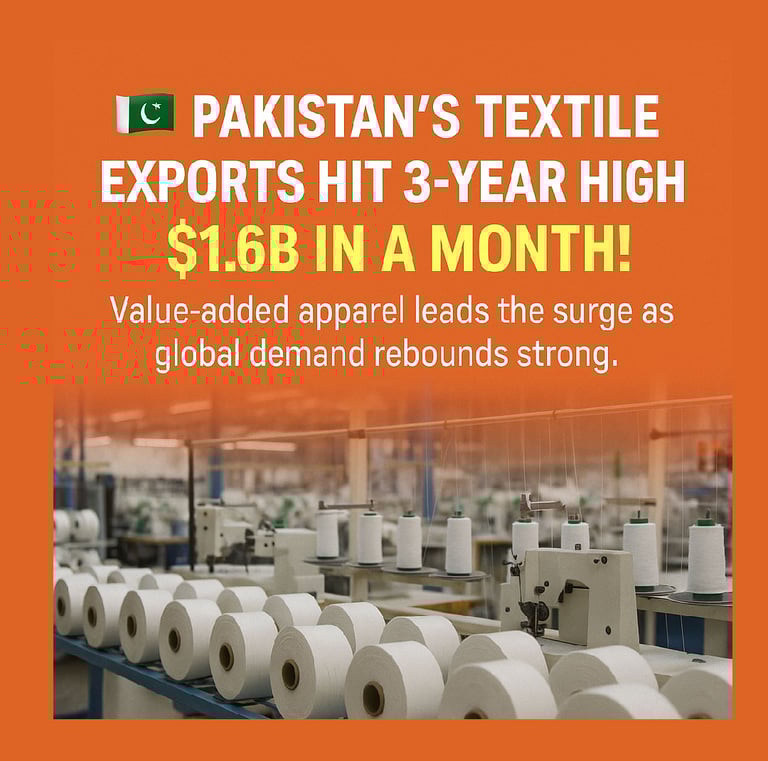
Pakistan’s textile exports have soared to a three-year high of $1.6 billion in September 2025, reflecting a strong rebound in global demand for value-added products and renewed international orders, as per provisional figures from the State Bank of Pakistan (SBP).
According to Topline Securities, exports of knitted garments alone touched a record-breaking $485 million, highlighting the dominance of the value-added textile segment. Overall, textiles accounted for nearly 60% of Pakistan’s total goods exports, reaffirming their position as the cornerstone of the national export economy.
📈 Sector Rebounds Amid Global Stability
The rise in exports follows improved trade linkages, a stable exchange rate, and a gradual post-pandemic recovery. However, the sector continues to grapple with high energy prices, costly financing, and disruptions in cotton supply, which remain key challenges to sustainable growth.
A Taurus Securities report projected that the profitability of listed textile firms would jump over threefold year-on-year in the first quarter of FY26, supported by increased export volumes, reduced borrowing costs, and Pakistan’s growing advantage following new U.S. tariffs on regional competitors.
Taurus also forecasted 11 percentage points margin expansion, citing improved cost management, renewable energy adoption, and stable currency trends. Textile exports grew 6% year-on-year in the first quarter, backed by a 56% surge in local cotton production.
🏭 Industry Leaders See Profit Growth
Gul Ahmed Textile Mills is expected to report a Rs 2.4 billion profit, up 6%.
Nishat Mills is projected to earn Rs 1.3 billion, marking a 41% rise.
Interloop Limited may record a tenfold jump to Rs 2.5 billion, fueled by strong apparel and denim demand.
⚠️ Challenges Ahead
Despite the encouraging figures, industry insiders warn of structural hurdles. A senior textile representative noted that yarn shortages caused by rain-damaged cotton crops have forced manufacturers to import raw materials, increasing costs due to dollar-based payments.
Further strain has come from import duties on essential accessories such as zippers and buttons, raising production expenses for exporters already battling one of the region’s highest policy rates (11%) and steep power tariffs. These factors have reduced Pakistan’s cost competitiveness against Bangladesh and Vietnam.
🌍 Expanding Global Reach
Nevertheless, exporters of home textiles — including bed linens, towels, and furnishings — continue to grow internationally, actively showcasing products at major European trade fairs.
Omer Salahuddin, Messe Frankfurt’s regional representative, encouraged Pakistani manufacturers to participate in exhibitions like Heimtextil, Techtextil, Texprocess, and Texworld, which connect the full textile value chain — from fibers and fabrics to finished goods.
“These events open doors to tens of thousands of global buyers, innovators, and sustainability leaders,” he said. “Pakistan’s textile industry must leverage such platforms to strengthen global visibility and stay competitive in design and technology.”