
⚠️ Petrol prices may jump again! Sindh’s infrastructure cess stalls oil imports, sparking fears of a fuel crisis.
10/21/20252 min read
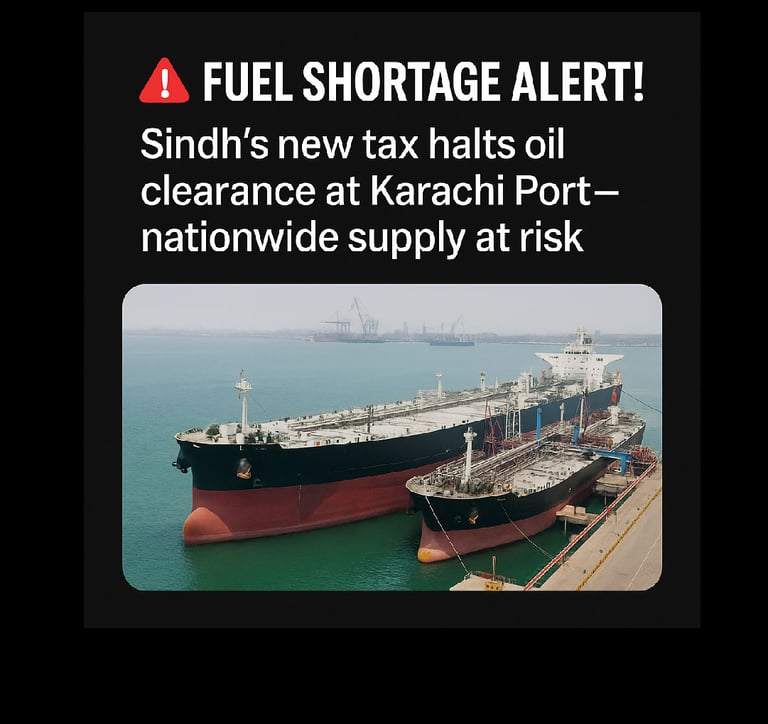
Sindh Tax Delays Fuel Clearance at Karachi Port, Raising Fears of Nationwide Shortage
The enforcement of the Sindh Infrastructure Development Cess has disrupted the clearance of petroleum shipments at Karachi Port, sparking concerns over a possible countrywide fuel shortage.
In an urgent appeal to Sindh Chief Minister Maryam Shah, the Oil Companies Advisory Council (OCAC) warned that ongoing delays in customs clearance could halt the petroleum supply chain nationwide. The council stated that vessels currently docked at the port, as well as those waiting offshore, need immediate clearance to maintain smooth fuel distribution across Pakistan.
According to the OCAC letter, Pakistan State Oil (PSO) tankers MT Islam 2 and MT Hanifa have already been berthed but remain uncleared, while stocks at the Keamari Oil Terminal are rapidly running out. “Only after prompt customs clearance can the country’s petroleum supply chain remain uninterrupted,” the statement emphasized.
Fuel Supply Chain Under Threat
The advisory council warned that if upcoming cargoes — including Wafi Energy’s petroleum consignment and Parco’s crude oil shipment, due on October 21 — face similar clearance delays, the crisis could intensify. The newly imposed 1.8% infrastructure cess, it added, places a heavy financial burden on the petroleum industry and could raise the cost of fuel by over Rs3 per litre, ultimately impacting consumers even though fuel prices are regulated by the government.
The OCAC noted that with the agriculture season currently underway, the disruption in oil supply could seriously affect farm operations and logistics. Even after resolution, the supply chain might take up to two weeks to return to normal. The council has urged provincial authorities to intervene immediately to avert a nationwide fuel crisis.
Legal Dispute Over Infrastructure Cess
OCAC Chairman Abdul Sami Khan recalled that both Sindh and Balochistan governments have been collecting the Infrastructure Development Cess on petroleum, oil, and lubricant (POL) imports since 1994. The levy was contested in the Sindh High Court (SHC), which initially suspended its collection but later upheld the cess in 2021.
The decision was subsequently challenged in the Supreme Court, which suspended the SHC’s ruling and directed that existing bank guarantees remain protected under judicial review. To ensure uninterrupted oil supply, the authorities had previously allowed the industry to submit undertakings instead of bank guarantees.
However, in July 2023, the Sindh Excise and Taxation Department reinstated the requirement for bank guarantees at the time of goods declaration, reversing the earlier interim arrangement. The OCAC maintains that this change has caused severe operational challenges for importers while the issue remains sub judice before both the Supreme Court and the Balochistan High Court.
Federal vs Provincial Jurisdiction
The Ministry of Energy has consistently maintained that fuel pricing and related taxation fall under federal jurisdiction, and both Punjab and Khyber Pakhtunkhwa have already exempted petroleum products from the cess under their respective laws.
Highlighting the financial strain, the OCAC estimated that a single 40,000-metric-ton oil shipment costs around $40 million, meaning any delay in clearance leads to significant demurrage charges and supply disruptions. The council has appealed for urgent government intervention to prevent a potential fuel crisis that could paralyze transport, agriculture, and industry across Pakistan.